

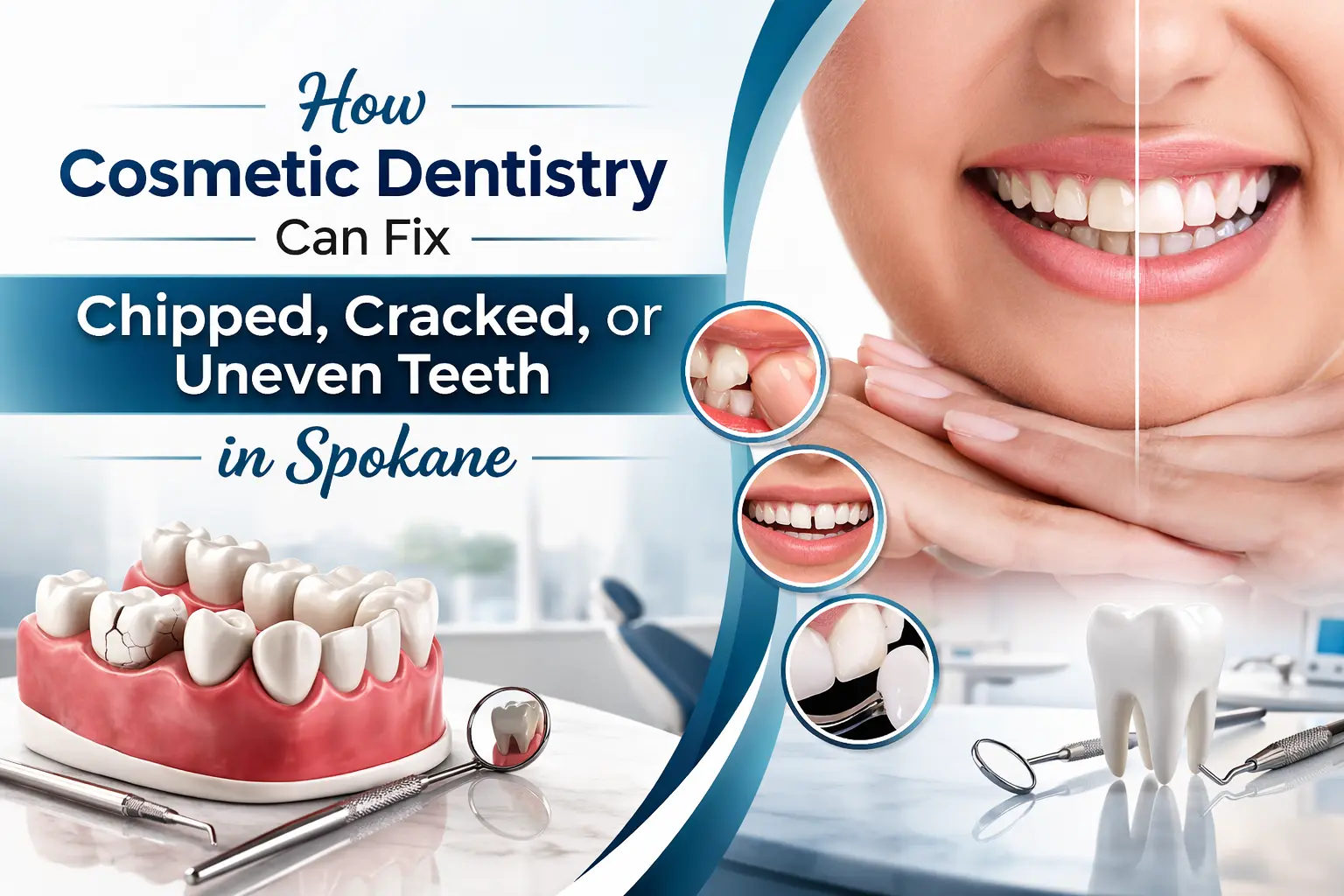
Most people have at least one thing about their smile they’d quietly like to change. A chipped front tooth from an old sports collision. A crack that appeared out of nowhere. Teeth that never quite lined up the way you hoped. These aren’t vanity concerns — they’re things that affect how you feel in photos, in meetings, in everyday conversations. And more often than people realize, they’re very fixable.
Cosmetic dentistry has come a long way. Today’s treatments are more natural-looking, longer-lasting, and less invasive than they were even ten years ago. For Spokane residents dealing with chipped, cracked, or uneven teeth, modern solutions are closer than you might think.
This guide walks you through the most effective treatment options, what to realistically expect, and how to figure out which path makes the most sense for your situation.
Why Chipped and Cracked Teeth Are More Common Than You Think
Tooth enamel is the hardest substance the human body produces — harder than bone. But that doesn’t make it indestructible. The American Dental Association notes that chipped or fractured teeth are among the most frequent dental injuries seen in adults. Causes range from biting down on something unexpectedly hard to trauma, teeth grinding (bruxism), or simply the gradual wear that comes with age.
Leaving a chip or crack untreated isn’t just a cosmetic issue. Over time, damaged enamel can lead to sensitivity, further fracturing, or decay if bacteria reach the inner layers of the tooth.
That’s why working with a trusted cosmetic dentist in Spokane, WA, sooner rather than later is genuinely worth it — both for appearance and for long-term dental health.
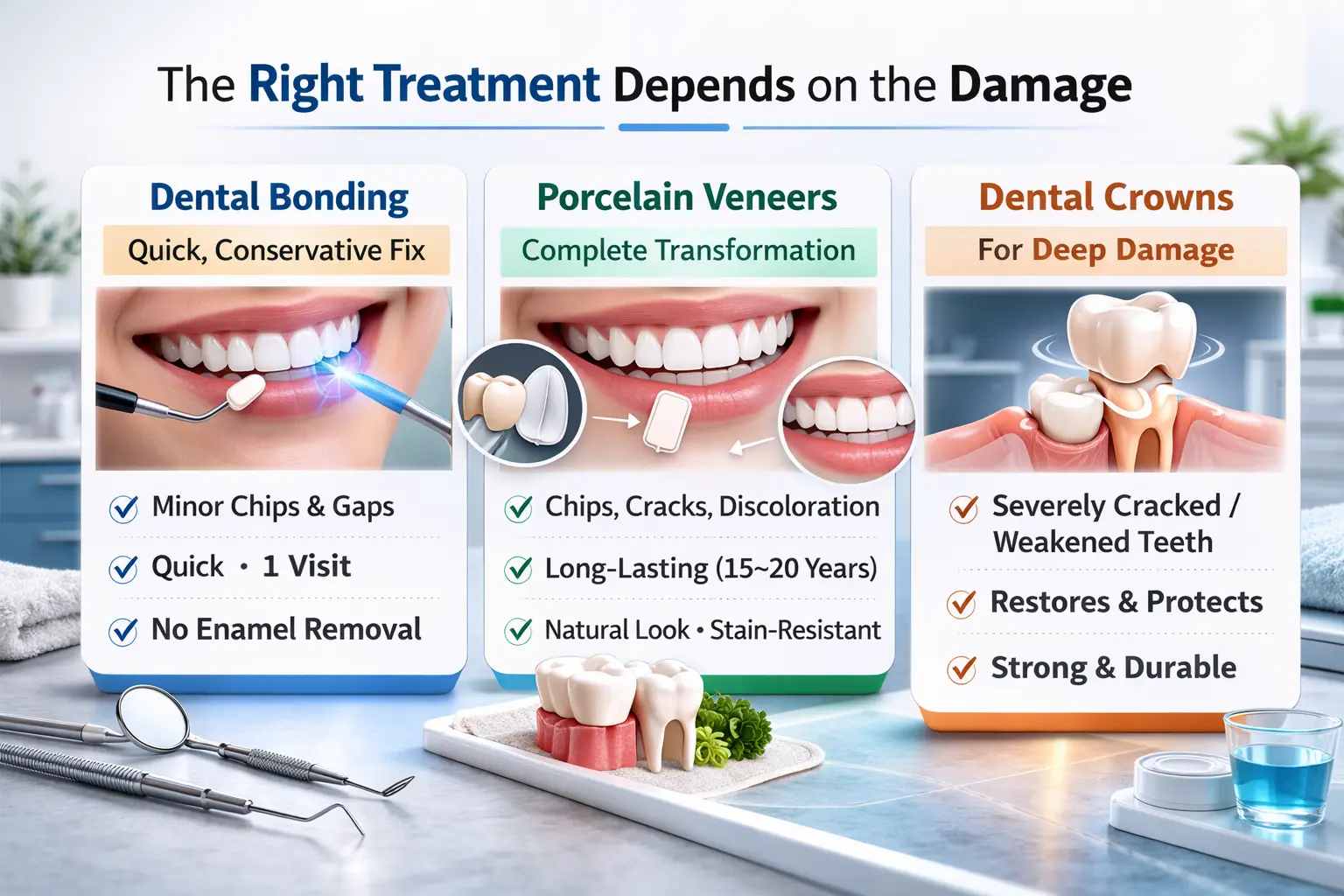
The Right Treatment Depends on the Damage
Not every cosmetic issue requires the same solution. What works beautifully for a minor chip might be completely wrong for a deep crack or significant misalignment. Here’s a breakdown of the most common treatments and when each one tends to make the most sense.
Dental Bonding: The Quick, Conservative Fix
Dental bonding is often the first recommendation for minor chips, small gaps, or slight surface irregularities. A tooth-colored composite resin is applied directly to the affected area, shaped by hand, and hardened with a curing light. The entire process typically takes less than an hour per tooth — no anesthesia is required in most cases, and no enamel is removed.
Bonding is one of the most conservative cosmetic treatments available, which is part of why it’s so widely used. It blends naturally with surrounding teeth and can last anywhere from five to ten years with proper care. For anyone who wants a noticeable improvement without committing to a more involved procedure, bonding is often the right starting point.
Porcelain Veneers: For a More Complete Transformation
Veneers are ultra-thin shells of porcelain bonded to the front surface of teeth. They’re designed to address several issues at once — chips, cracks, discoloration, uneven edges, and minor crowding can all be corrected with a single set of veneers. The result looks remarkably natural because porcelain reflects light the way tooth enamel does.
The process typically involves two appointments: one to prepare the teeth (a very thin layer of enamel is removed to accommodate the veneer) and a second to place the custom-fabricated shells. Properly placed porcelain veneers can last fifteen to twenty years, making them one of the most durable cosmetic options available. They’re also stain-resistant, which appeals to patients who want lasting results without ongoing whitening treatments.
Dental Crowns: When the Damage Goes Deeper
A crown is recommended when a tooth is significantly cracked, weakened, or has lost enough structure that bonding or a veneer won’t provide adequate protection. A crown fits over the entire visible portion of the tooth, restoring both its appearance and function. Modern crowns are made from tooth-colored ceramic or zirconia, so they blend naturally with the rest of your smile.
Crowns also serve a protective role. If a tooth has been weakened by a deep crack, a crown prevents further fracturing and keeps bacteria from reaching the pulp. This is one of those cases where the cosmetic and functional benefits genuinely overlap.
Restoring Function with Dental Implants
If a tooth is missing entirely rather than just chipped, a dental implant provides the most permanent and lifelike replacement available. We surgically place a small titanium post into the jawbone, which acts as a sturdy root for a custom-crafted crown. This not only restores your ability to eat any food you choose but also prevents the bone loss that typically follows tooth loss. By mimicking the natural root, implants maintain your facial structure and prevent surrounding teeth from shifting out of place.
Straightening Smiles with Invisalign
Correcting uneven or crowded teeth doesn’t always require the “metal-mouth” look of traditional braces. Invisalign utilizes a series of clear, removable aligners to gradually shift your teeth into their ideal positions. This system is a favorite among our adult patients because the trays are virtually invisible and can be taken out for meals and proper cleaning. It is an excellent way to address the underlying alignment issues that often contribute to uneven wear or chipped edges on your front teeth.
Brightening Your Look with Professional Teeth Whitening
Sometimes the simplest way to refresh a smile is to remove years of built-up stains from coffee, tea, or wine. While over-the-counter strips often provide inconsistent results, our professional whitening treatments use high-concentration gels that penetrate deep into the enamel for a dramatic change. A bright shade often serves as the perfect finishing touch after we have repaired chips or cracks with bonding or veneers.
What the Process Looks Like at Trailhead Dental
Trailhead Dental takes a thorough, unhurried approach to cosmetic consultations. Rather than leading with a treatment recommendation, the process starts with listening. What bothers you most about your smile? What are your priorities — speed, longevity, minimal tooth preparation? Are there any underlying concerns (like grinding) that should be addressed first?
From there, a full exam, including digital X-rays and, in many cases, photos, helps the dentist understand the full picture. Cosmetic treatment that doesn’t account for underlying bite issues or gum health won’t hold up the way it should. That’s why the evaluation step isn’t rushed.
Once a plan is in place, you’ll know exactly what’s involved before anything begins — how many appointments, what each one entails, and what to realistically expect afterward. No surprises. For patients with dental anxiety, that kind of transparency makes a real difference.
Your Smile Deserves Attention — Here’s Where to Start
A chipped tooth you’ve been ignoring, a crack that makes you self-conscious, teeth that have never quite lined up the way you’d like — these are things that can be addressed. Modern cosmetic dentistry offers solutions that look natural, hold up over time, and are more accessible than most people assume.
Trailhead Dental works with Spokane, WA, patients to find the right approach for their specific situation — not a one-size-fits-all recommendation, but a plan that actually fits. If you’ve been putting off addressing something about your smile, this is the right time to change that.
Call Trailhead Dental today or schedule online at trailheaddentalwa.com. A consultation is the first step and often the one that changes everything.
People Also Ask About Cosmetic Dentistry
Will cosmetic dental work look natural?
Yes — when done well, it absolutely should. Both composite bonding and porcelain restorations are matched to the shade, translucency, and shape of your natural teeth. The goal is for no one to be able to tell what was done; the change should simply look like a better version of your own smile.
Does cosmetic dentistry hurt?
Most cosmetic procedures involve minimal discomfort. Bonding and contouring are typically done without anesthesia. Veneers and crowns may require a local anesthetic during tooth preparation, but the actual placement is painless. Any post-procedure sensitivity is usually mild and temporary.
Does insurance cover cosmetic dental work?
Most dental insurance plans classify cosmetic procedures as elective and don’t cover them. However, there are exceptions — if a crown is placed for structural reasons rather than purely cosmetic ones, it may qualify for partial coverage. It’s worth reviewing your plan carefully, and the front desk at Trailhead Dental can help you sort through your options.
Can I whiten my teeth before getting veneers or bonding?
This is worth discussing before you book whitening. Composite resin and porcelain don’t respond to bleaching agents the way natural enamel does — so if you whiten after bonding or veneers are placed, the restoration won’t match. The better approach is to whiten first, let the shade stabilize, and then have the cosmetic work matched to your new, brighter baseline.
How long does recovery take after cosmetic dental procedures?
For bonding and contouring, there’s essentially no recovery — you can eat and drink normally right after. Veneers and crowns may cause mild sensitivity for a day or two, particularly to temperature changes, as the tooth adjusts. Your provider will give you specific care instructions depending on what was done.