
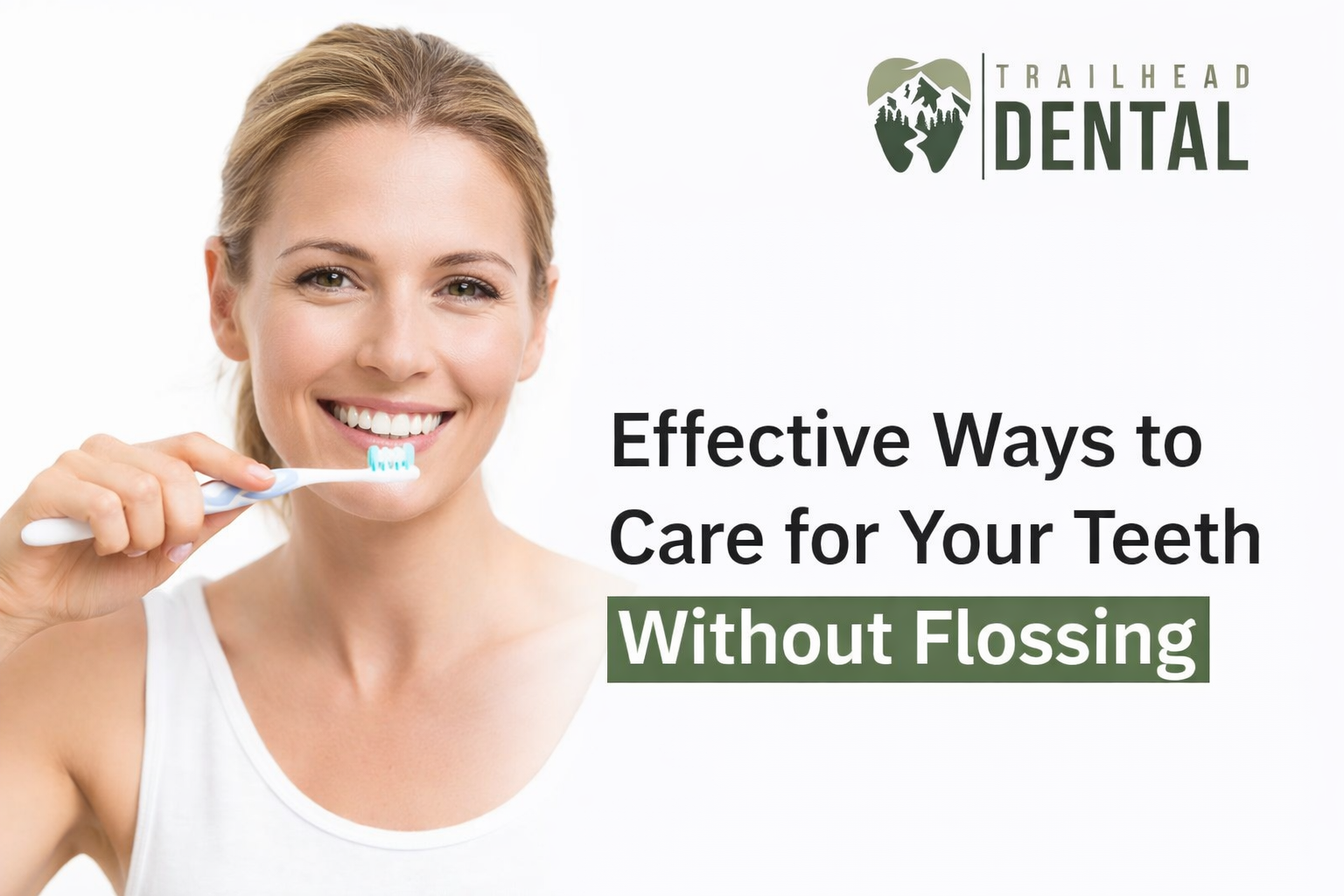
Flossing is great, but it’s not the only way to keep your smile bright and healthy. A lot of people have difficulty flossing or simply find it annoying, so there are alternative methods to do the same job. Not involving traditional flossing at all, these alternatives can still be just as effective at removing plaque and promoting gum health.
Maintaining oral health involves more than just brushing and flossing. With a few extra techniques and tools, you can maintain clean teeth, healthy gums, and a well-kept smile throughout your daily routine. As long as you follow the appropriate steps, your teeth can be in pristine condition even if you don’t floss every day.
Why Skipping Flossing Should Come With a Backup Plan
Flossing removes debris that gets stuck between your teeth, an area that a toothbrush doesn’t reach. If skipped, plaque collects in these crevices and can lead to gum inflammation and cavities.
However, unlike in the past, modern dentistry recognizes that flossing isn’t practical for every patient. A dentist in Spokane may suggest alternative methods that deliver comparable outcomes when utilized accurately and consistently. The purpose is not to be perfect, but to maintain good plaque levels.
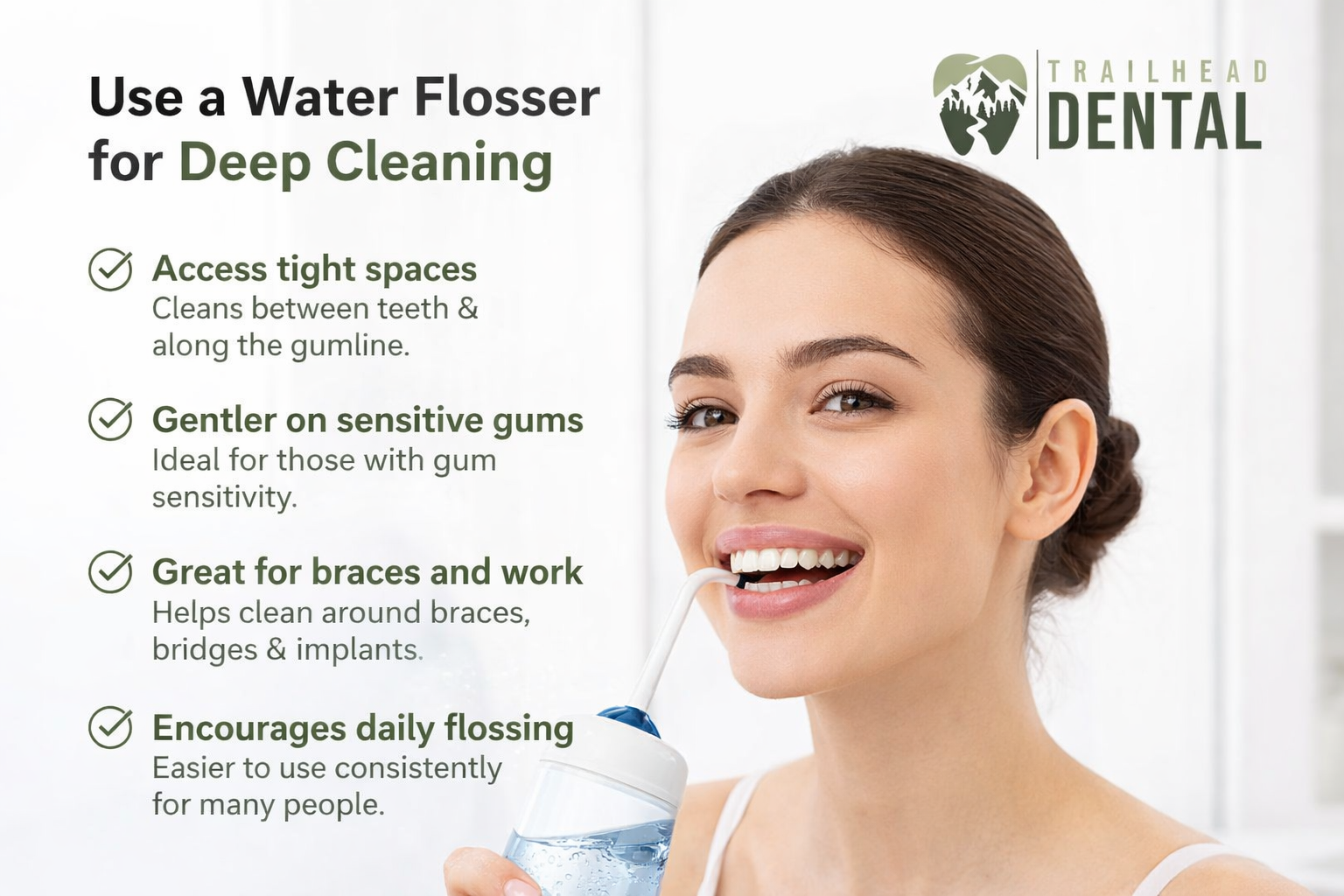
Use a Water Flosser for Deep Cleaning
Water flossers offer a comparably effective and comfortable alternative to traditional flossing by cleaning between teeth and along the gumline. Water flossers, on the other hand, use a continuous stream of pressurized water to remove food particles and bacteria, providing an effective, gentler cleaning option for individuals who cannot or are less able to floss successfully.
Benefits of Water Flossers:
- Access tight spaces: Water flossers do a real-deal job of cleaning between teeth and along the gumline, reaching places traditional brushing may not reach.
- Gentler on sensitive gums: Water flossers are perfect for those who may feel gum sensitivity, as they clean without aggravating or irritating the gums.
- Great for braces and work: They help patients with braces, bridges, or implants keep their mouths clean.
- Encourages daily flossing: The water flosser is often considered easier to use consistently by many people, making it a great addition to a regular oral care routine.
Regular water flossing can significantly improve oral health and lead to healthier gums over time.
Consider Interdental Brushes for Targeted Cleaning
This would generally include the use of a brush between teeth, known as interdental brushes. Braces are available in various sizes to suit people with different tooth gaps.
Here’s how interdental brushes help clean your teeth:
- Spot cleaning: Interdental brushes can reach those hard-to-reach spaces between teeth.
- Easy to use: For many people, they are easier than floss, particularly at wider gaps.
- Good for gum recession: They are suited for people with gum recession or those who have undergone dental procedures.
Regular use of an interdental brush can significantly impact your gum health and help keep your teeth clean.
Choose the Right Toothbrush Technique
Though brushing your teeth is a simple act, using the right technique will help ensure you remove plaque and bacteria effectively. If you’re forgoing flossing, good brushing habits are even more critical.
Here’s what you should remember while brushing:
- Opt for a soft-bristled toothbrush: Softer bristles are less abrasive on gums and enamel.
- Tilt the brush properly: Hold your toothbrush at a 45-degree angle towards your gums to get the best performance.
- Make circles: Skip the scrubbing, which can irritate gums.
- Brush for two minutes: Make time to thoroughly brush every surface of your teeth.
A regular brushing habit will help remove more plaque and keep your teeth safe from cavities and gum disease.
Use Antibacterial Mouthwash
Explore the world of mouthwash and its importance beyond just freshening your breath. Using antibacterial mouthwash daily can help fight bacteria and leave your mouth feeling fresh.
Benefits of Mouthwash:
- Kills bacteria: Antibacterial mouthwashes help kill disease-causing bacteria that contribute to plaque and cavities.
- Promotes gum health: Regular use can reduce inflammation and support gum health, helping prevent gingivitis.
- It refreshes your breath: An excellent mouthwash ensures your mouth feels clean and fresh, providing long-lasting freshness.
- Preventing bad breath: Rinsing with mouthwash helps combat persistent bad breath caused by bacteria.
It is a simple yet excellent approach to improve your oral health by incorporating mouthwash into your daily routine, especially to help keep your natural teeth and gums healthy throughout the day.
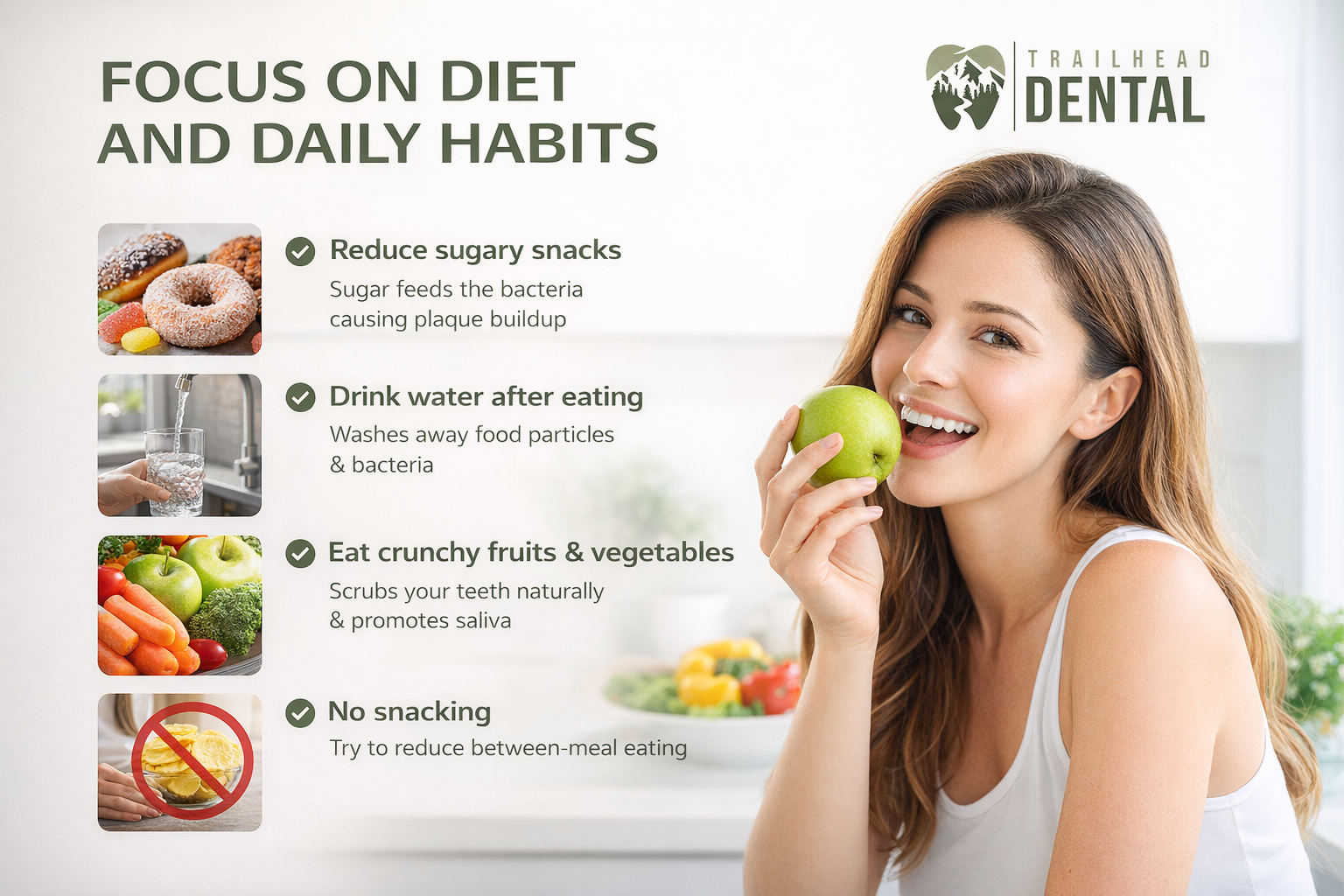
Focus on Diet and Daily Habits
What you eat directly impacts oral health. Some foods help keep your pearly whites safe, while others contribute to plaque and may increase your risk for cavities. Being mindful of the food we eat and the lifestyle choices we make can do wonders for keeping our calling card healthy.
Here are some helpful dietary habits:
- Reduce sugary snacks: Sugary foods feed the bacteria in your mouth, causing plaque buildup and cavities.
- Drink water after eating: Water helps wash away food particles and bacteria, which can keep your mouth cleaner.
- Eat crunchy fruits and vegetables: Apples, carrots, whatever you prefer to munch on. These foods scrub your teeth naturally and promote the production of saliva, which helps neutralize acids.
- No snacking: Snacking can increase plaque accumulation on your teeth, so try to reduce between-meal eating.
Make these easy modifications to your routine, and you can keep plaque at bay while ensuring optimal oral health.
Chew Sugar-Free Gum for Natural Cleaning
Sugar-free chewing gum is an easy way to keep your teeth clean throughout the day. Not everyone has time to brush their teeth every meal or snack.
Here are the benefits of sugar-free gum:
- Stimulates saliva: Saliva can help neutralize acids and wash away food particles.
- Removes plaque: Gum dislodges food and bacteria caught in between teeth.
- Good for enamel: An increased flow of saliva protects tooth enamel from erosion.
Sugar-free gum is an easy addition to your daily routine that will help care for your teeth when you’re without floss.
Stay Consistent with Professional Cleanings
Despite strong at-home preventive care, nothing substitutes for professional cleanings for keeping your oral health in check. Your dentist can dethatch hardened plaque (tartar), which cannot be removed with at-home tools.
Here’s why professional cleanings matter:
- Scaling: This is a procedure where the dentist uses special instruments to clean below the gumline and remove any tartar that has built up.
- Prompt detection of issues: A routine visit helps identify problems like cavities, gum disease, and tooth damage early.
- Specific advice: Your dentist can make recommendations tailored to your dental health needs.
Regular professional cleanings will keep your teeth and gums in good working order, regardless of whether you floss.
Building a Bright Smile Begins with Your Wellness Routine
You don’t need to depend on floss alone for oral care. With the right tools and habits, you can keep your mouth clean and healthy without using dental floss. There are many daily habits you can adopt to help protect your teeth, from using a water flosser to eating a healthy diet.
No two people should follow the same oral healthcare regimen. At Trailhead Dental, we are here to help you discover what is right for you. Call us today and schedule an appointment to find out how we can help you maintain a bright, healthy smile!
Questions People Ask About Dental Care
- Can I keep my teeth healthy without flossing?
Yes, it is possible to maintain healthy teeth without flossing by using alternatives like water flossers, interdental brushes, and mouthwash. Regular brushing and professional cleanings also help prevent plaque buildup. - How often should I use a water flosser?
A water flosser should be used once daily for optimal results. It helps clean between teeth and along the gumline, effectively removing debris and bacteria that brushing alone may miss. - Are interdental brushes better than floss?
Interdental brushes are a great alternative, especially for people with larger gaps between their teeth. They allow for precise cleaning and are easier to use than traditional floss. - Is mouthwash as effective as flossing?
Mouthwash helps reduce bacteria and freshen breath, but it doesn’t replace flossing entirely. It should be used as part of a complete oral hygiene routine to support healthy gums and teeth. - Can chewing gum replace flossing?
Chewing sugar-free gum can help clean teeth by stimulating saliva production and dislodging food particles. However, it does not replace the need for regular brushing and flossing. - How often should I visit the dentist?
It’s recommended to visit the dentist every six months for professional cleanings and checkups. Regular visits help detect issues early and keep your teeth and gums healthy.